- This topic is empty.
-
AuthorPosts
-
24/11/2026 at 17:53 #16086
As the demand for renewable energy continues to grow, Concentrating Solar Power (CSP) projects are attracting attention in regions with abundant direct sunlight. Unlike conventional photovoltaic systems, CSP technology uses mirrors or reflectors to concentrate sunlight onto a receiver, where thermal energy is collected for power generation. To keep these reflective structures accurately aligned with the sun, reliable tracking equipment is essential.
A slewing drive plays an important role in this process. It provides controlled rotational movement for heliostats, parabolic trough collectors, and other solar thermal tracking structures. Its torque capacity, transmission performance, positioning stability, and resistance to outdoor conditions can all influence the operation of the tracking system.
For CSP equipment manufacturers and project contractors, finding a suitable slewing drive supplier is therefore an important part of equipment development and procurement. China has a mature manufacturing supply chain for mechanical transmission components, offering buyers access to manufacturers with integrated machining, assembly, and customization capabilities.
SunSlew is one such manufacturer specializing in slewing drives, slewing bearings, and gears. This article discusses the main considerations when selecting a CSP slewing drive and explains what buyers should look for in a manufacturing partner.
1. Why Slewing Drives Matter in CSP Tracking Systems
CSP systems depend on the accurate movement of reflective surfaces. Even a relatively small deviation in reflector orientation may affect the direction of concentrated sunlight and reduce the effectiveness of the collection system.
The slewing drive provides the rotational force needed to adjust the position of the tracking structure. Depending on the CSP technology, the equipment may require single-axis or dual-axis movement.
For example:
-
Solar tower systems: Heliostats generally need azimuth and elevation adjustment to direct reflected sunlight toward a central receiver.
-
Parabolic trough systems: Collectors typically rotate along one axis to follow the sun's apparent movement.
-
Linear Fresnel systems: Multiple reflector rows require coordinated angular adjustment.
-
Solar dish systems: Tracking mechanisms need to maintain accurate alignment with the receiver.
These applications have different structural layouts and load conditions. A suitable drive must be selected according to the actual tracking mechanism rather than simply choosing a model based on its external dimensions.
2. Key Factors When Selecting a CSP Slewing Drive
A CSP slewing drive must meet the mechanical and operational requirements of the complete tracking structure. Before requesting a product proposal, buyers should prepare the following technical information.
Output torque and holding torque
Output torque determines the drive's ability to rotate the connected structure. Holding torque is important for maintaining the reflector's position when the motor is not actively moving it.
The required values depend on the weight and dimensions of the reflector, structural design, friction, wind loading, and installation conditions. Buyers should distinguish between normal operating loads and loads under high-wind or stow conditions.
Axial load, radial load, and tilting moment
These parameters describe the forces acting on the drive from different directions. They are especially important for large reflector structures, where wind and structural loads can create considerable overturning forces.
The drive should be selected using the project's engineering calculations, with suitable safety factors defined by the system designer.
Transmission structure and positioning performance
The gear transmission affects torque delivery, movement smoothness, and mechanical stability. Worm gear slewing drives are widely used in solar tracking applications because of their compact structure and high reduction ratios.
For CSP equipment, buyers should also consider gear clearance, output connection stiffness, and the positioning requirements of the complete tracking system.
Environmental protection
CSP plants are frequently located in areas with high temperatures, strong sunlight, dust, and considerable temperature changes. Depending on the project location, the drive may need suitable sealing, corrosion protection, lubrication, and housing protection.
The required specifications should be confirmed with the manufacturer according to the actual operating environment.
3. SunSlew CSP Slewing Drive Product Range
SunSlew provides dedicated slewing drive solutions for CSP tracking applications. Its product range includes different configurations designed to meet the movement and load requirements of solar thermal equipment.
The SunSlew CSP slewing drive product range includes the SVH5, SH7, and SH6P models.
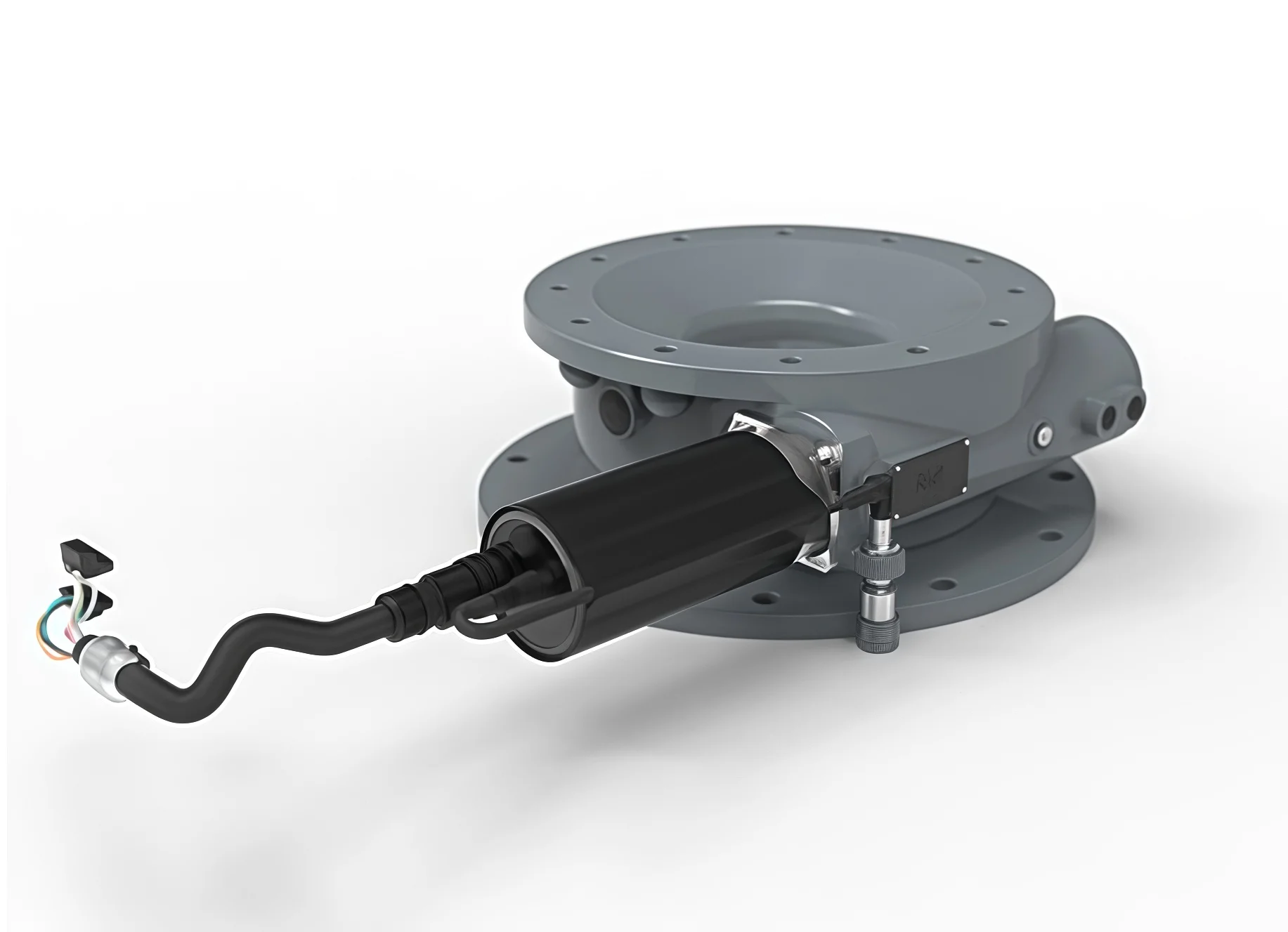
SVH5: Dual-Axis Slewing Drive
The SVH5 is designed for applications requiring both azimuth and elevation rotation. Its integrated dual-axis arrangement allows the tracking structure to adjust in two directions, with separate motors driving the two axes.
This configuration is relevant to equipment such as heliostats, where the reflector must change its orientation to direct sunlight toward a fixed receiver.
SH6P and SH7: Horizontal-Mount Slewing Drives
The SH6P and SH7 are horizontal-mount configurations for CSP tracking structures. They offer different torque and load specifications, allowing equipment designers to evaluate the appropriate model according to their mechanical requirements.
For reference, the published SH6P specifications include:
-
Output torque: 2,500 N·m
-
Holding torque: 30 kN·m
-
Tilting moment: 35 kN·m
The published SH7 specifications include:
-
Output torque: 3,000 N·m
-
Holding torque: 19.2 kN·m
-
Tilting moment: 23.5 kN·m
These specifications apply to the respective models and should be checked against the latest technical documentation before selection. A higher value in one parameter does not automatically mean that a model is more suitable for every application. The complete load combination and installation arrangement must be evaluated.
4. Why Work with a Chinese Slewing Drive Manufacturer?
For overseas CSP equipment manufacturers, working directly with a factory can simplify technical communication and product customization. It also provides a clearer understanding of how the components are processed, assembled, and inspected.
Jiangyin Sunslew Machinery Equipment Co., Ltd. (SunSlew) specializes in the research and development, machining, manufacturing, and sales of slewing drives, slewing bearings, and gears.
Established in 2014, the company is based in Jiangyin, Jiangsu, China. Its manufacturing operations integrate product design, precision processing, assembly, and sales. This allows the company to manage important production stages within its own manufacturing system.
SunSlew's manufacturing facilities include:
-
More than 80 sets of precision processing and manufacturing equipment
-
Four assembly production lines
-
An annual slewing drive production capacity of approximately 300,000 units
-
Product development and manufacturing capabilities covering slewing drives, slewing bearings, and gears
For B2B buyers, these capabilities are relevant to both standard product orders and projects requiring customized mechanical configurations.
A manufacturer with its own machining and assembly resources can also communicate more directly about production feasibility, component dimensions, and technical adjustments. This is particularly useful when a CSP equipment design requires a specific mounting interface or output connection.
More information about the company and its manufacturing capabilities is available on the SunSlew official website.
5. Customization for Different CSP Equipment Designs
Not every CSP project uses the same reflector structure or tracking arrangement. Differences in equipment dimensions, installation orientation, load distribution, and control systems can affect the required slewing drive configuration.
For this reason, customization is an important consideration when choosing a supplier.
Depending on the project, buyers may need to discuss:
-
Mounting dimensions and flange connections
-
Output interface and structural connection
-
Required output and holding torque
-
Motor configuration and electrical requirements
-
Rotation range and installation orientation
-
Environmental protection and corrosion resistance
-
Product drawings and technical documentation
Providing complete technical information at the beginning of the project helps the manufacturer evaluate the requirements more accurately. It also reduces the risk of dimensional mismatches or unnecessary modifications during equipment assembly.
SunSlew's focus on slewing drive and gear manufacturing provides a manufacturing foundation for discussing different product configurations with customers. For projects with special requirements, buyers can contact the company with drawings, load data, and application details for technical evaluation.
6. Manufacturing Quality and Production Consistency
A slewing drive is expected to perform repeated movements over an extended operating period. Its service performance depends on the quality of individual components as well as the accuracy of the complete assembly.
Several manufacturing stages deserve attention:
Precision machining: Gear and bearing-related components need controlled dimensions and surface quality. Machining accuracy affects component fit and transmission performance.
Component inspection: Incoming materials and processed parts should be checked against the relevant technical requirements.
Assembly control: Correct component positioning, fastening, lubrication, and assembly procedures help maintain consistent product performance.
Final inspection: Finished products should undergo appropriate checks before shipment. Buyers can request relevant inspection records and technical documents when evaluating a supplier.
For CSP projects, manufacturing consistency is especially important when multiple tracking units are installed across a large solar field. Consistent product dimensions and performance can make equipment installation, commissioning, and later maintenance more manageable.
7. What Should Buyers Prepare Before Contacting a Manufacturer?
To improve communication and shorten the product selection process, CSP equipment manufacturers and project contractors should prepare several basic details before contacting a supplier:
-
Application type: Heliostat, parabolic trough, linear Fresnel reflector, solar dish, or another tracking structure.
-
Tracking arrangement: Single-axis or dual-axis movement.
-
Load information: Required output torque, holding torque, axial load, radial load, and tilting moment.
-
Installation details: Mounting orientation, flange dimensions, and available installation space.
-
Operating environment: Temperature range, dust exposure, humidity, wind conditions, and corrosion requirements.
-
Motor and control requirements: Motor type, voltage, speed, and control interface.
-
Project quantity and schedule: Estimated order quantity and expected delivery requirements.
With these details, the manufacturer can better assess whether an existing model is suitable or whether a customized configuration should be considered.
Conclusion: Find a Manufacturing Partner for Your CSP Project
Selecting a slewing drive for CSP equipment involves more than comparing torque ratings. Buyers need to evaluate the complete tracking application, including load conditions, positioning requirements, transmission structure, environmental protection, and mechanical integration.
The manufacturing partner also matters. Precision machining, organized assembly, inspection procedures, and the ability to discuss customized configurations all contribute to a reliable supply relationship.
SunSlew focuses on slewing drives, slewing bearings, and gears, supported by integrated manufacturing operations and a dedicated CSP product range. With models such as the SVH5, SH6P, and SH7, the company provides different configurations for solar thermal tracking applications.
For CSP equipment manufacturers, engineering companies, and project contractors looking for a slewing drive supplier in China, SunSlew is a manufacturer worth considering. Sharing your application details and technical requirements is a practical first step toward identifying a suitable solution.
http://www.sunslew.com
Jiangyin SunSlew Machinery Equipment Co., Ltd. -
-
AuthorPosts

- You must be logged in to reply to this topic.