- This topic is empty.
-
AuthorPosts
-
03/08/2026 at 14:28 #14635
Introduction
Selecting the right frequency band is one of the most important decisions when designing an IP Mesh Radio communication system. While many organizations focus on transmission distance, bandwidth, or hardware specifications, frequency selection directly affects network coverage, signal stability, interference resistance, and overall system performance.
An improperly selected frequency band can reduce communication range, increase signal loss, and limit the effectiveness of applications such as drone video transmission, emergency communication, industrial monitoring, and tactical networking. On the other hand, choosing the right frequency can help an IP Mesh Radio system achieve reliable long-range communication even in complex environments.
Different projects have different requirements. A public safety network operating in urban areas may prioritize penetration capability and reliability, while a UAV communication system may require higher bandwidth and low latency for real-time video transmission. Industrial applications may need stable connectivity across large outdoor areas with minimal infrastructure.
This guide explains the major IP Mesh Radio frequency options, the factors that influence frequency selection, and how to choose the best frequency band for your specific project.
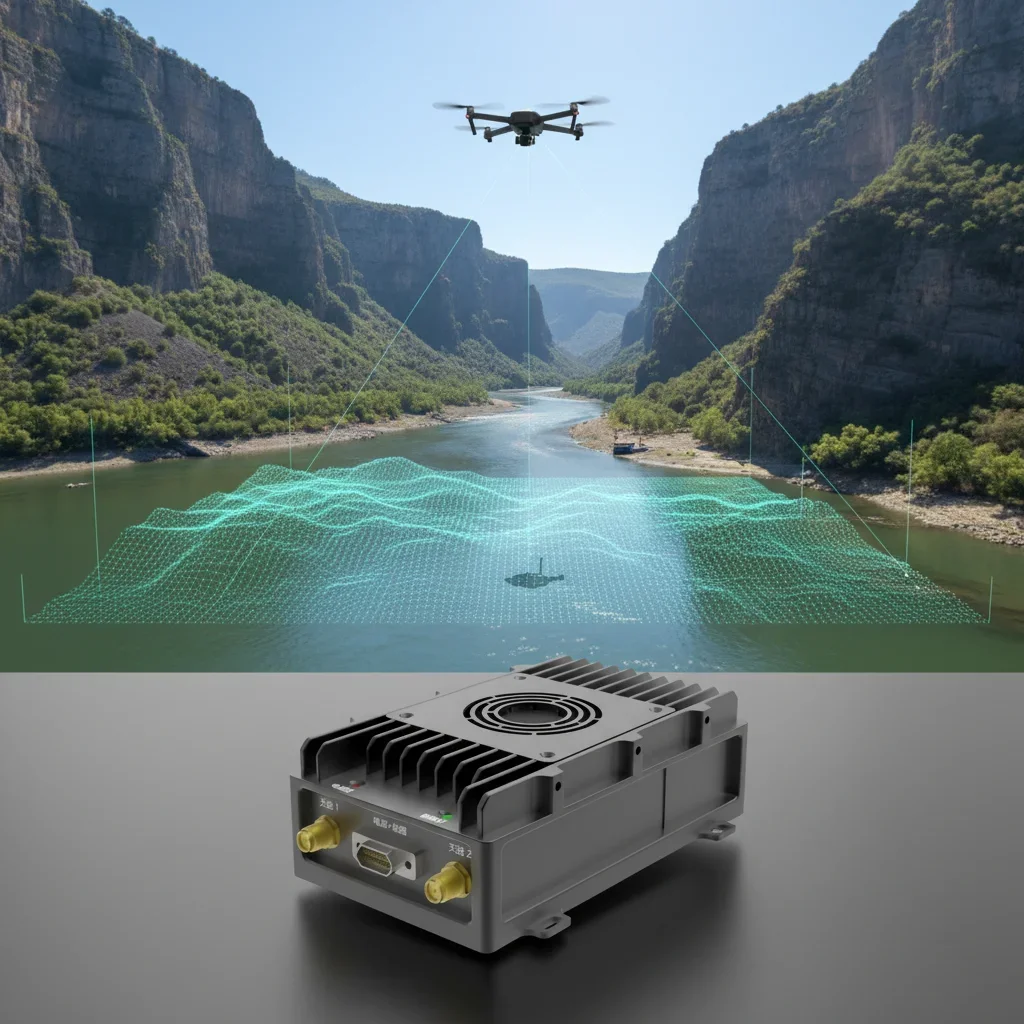
Understanding Frequency Bands in IP Mesh Radio Systems
Before selecting a frequency band, it is important to understand how radio frequency affects wireless communication performance.
Radio frequency refers to the range of electromagnetic waves used for transmitting wireless signals. In IP Mesh Radio networks, frequency selection determines several key performance factors:
-
Communication range
-
Signal penetration ability
-
Data transmission speed
-
Interference resistance
-
Antenna size requirements
-
Network reliability
Generally, lower frequency bands provide better coverage and obstacle penetration, while higher frequency bands offer greater bandwidth and faster data transmission.
There is no universally perfect frequency for every application. The ideal choice depends on the environment, communication objectives, and regulatory requirements.
Common IP Mesh Radio Frequency Options
Sub-GHz Frequency Bands for Long-Range Communication
Sub-GHz frequencies, typically below 1 GHz, are widely used for applications that require extended communication distances and strong penetration capability.
These frequency bands are popular for:
-
Remote monitoring systems
-
Industrial communication networks
-
Emergency response systems
-
Rural communication applications
-
Large-scale sensor networks
Advantages of Sub-GHz IP Mesh Radio Systems
Longer Transmission Distance
Lower frequencies experience less signal attenuation, allowing communication over greater distances compared with higher-frequency systems under similar conditions.
This makes sub-GHz long range IP Mesh Radio solutions suitable for:
-
Mining operations
-
Oil and gas fields
-
Agricultural monitoring
-
Remote infrastructure
Better Obstacle Penetration
Lower-frequency signals can travel more effectively through obstacles such as:
-
Buildings
-
Trees
-
Industrial structures
-
Uneven terrain
For projects where maintaining connectivity is more important than maximum data speed, sub-GHz frequencies can be an excellent choice.
Limitations of Sub-GHz Frequencies
However, sub-GHz systems also have limitations:
-
Lower available bandwidth
-
Reduced video transmission capability
-
Larger antenna requirements
-
Possible regional frequency restrictions
Therefore, sub-GHz IP Mesh Radio is usually better suited for control data, telemetry, and communication applications rather than high-definition video streaming.
2.4 GHz IP Mesh Radio Frequency
The 2.4 GHz frequency band is one of the most commonly used options for wireless communication systems worldwide.
A 2.4 GHz IP Mesh Radio system provides a balance between communication range, bandwidth, and hardware availability.
Advantages of 2.4 GHz Frequency
Good Data Transmission Performance
Compared with lower-frequency bands, 2.4 GHz provides more bandwidth, making it suitable for applications requiring:
-
Real-time video transmission
-
UAV communication
-
Remote monitoring
-
Multimedia data transfer
For example, an IP Mesh Radio for drone video transmission often uses 2.4 GHz technology because drones require stable video links and responsive control communication.
Compact Equipment Design
Higher frequencies allow smaller antennas and more compact radio devices, which is beneficial for:
-
UAV payload systems
-
Portable communication units
-
Mobile command equipment
Global Availability
The 2.4 GHz band is widely supported, making it easier to deploy in international projects.
Challenges of 2.4 GHz Systems
Despite these advantages, 2.4 GHz signals are more affected by:
-
Walls and physical obstacles
-
Dense urban environments
-
Wireless interference
Because many consumer wireless devices also operate in this band, interference management is an important consideration.
5 GHz IP Mesh Radio Frequency for High-Speed Applications
The 5 GHz frequency band is commonly selected when high data throughput is the priority.
A 5 GHz IP Mesh Radio communication system is often used in applications requiring:
-
High-definition video transmission
-
Fast data exchange
-
Low network congestion
-
Advanced surveillance systems
Advantages of 5 GHz Frequency
Higher Bandwidth Capacity
5 GHz provides wider channels, enabling faster data rates.
This makes it suitable for:
-
HD drone video transmission
-
Security surveillance
-
Autonomous vehicle communication
-
Large-scale wireless networks
Lower Interference in Some Environments
Compared with crowded 2.4 GHz networks, certain 5 GHz channels may experience less interference.
Limitations of 5 GHz
The main disadvantage is shorter communication range.
Higher-frequency signals:
-
Lose energy faster over distance
-
Are more affected by obstacles
-
Require better line-of-sight conditions
Therefore, 5 GHz IP Mesh Radio systems are often preferred for environments where bandwidth is more important than maximum coverage distance.
Factors to Consider When Choosing an IP Mesh Radio Frequency
Communication Distance Requirements
Distance is one of the first factors to evaluate.
For projects requiring:
-
Several kilometers of coverage
-
Remote outdoor communication
-
Infrastructure-free networking
Lower frequencies may provide better performance.
For shorter-range applications requiring:
-
High-speed data
-
Video transmission
-
Mobile connectivity
Higher frequencies may be more suitable.
Data Bandwidth Requirements
Different applications require different levels of data capacity.
Low Bandwidth Applications
Examples:
-
Sensor monitoring
-
GPS data
-
Basic command communication
Suitable options:
-
Sub-GHz frequencies
-
Lower data rate configurations
Medium Bandwidth Applications
Examples:
-
Voice communication
-
Industrial control systems
Suitable options:
-
900 MHz
-
2.4 GHz
High Bandwidth Applications
Examples:
-
HD video transmission
-
UAV surveillance
-
Real-time imaging
Suitable options:
-
2.4 GHz
-
5 GHz
Operating Environment
The physical environment has a significant impact on frequency performance.
Urban Areas
Cities contain many obstacles and interference sources.
Recommended considerations:
-
Strong penetration capability
-
Interference management
-
Adaptive frequency selection
Open Areas
Examples:
-
Farms
-
Deserts
-
Coastlines
Long-range frequencies may perform better because fewer obstacles affect signal propagation.
Industrial Sites
Factories and industrial facilities may contain:
-
Metal structures
-
Electrical equipment
-
Machinery interference
A properly selected frequency combined with robust IP Mesh Radio hardware can improve communication reliability.
Mobility Requirements
Mobile applications require special consideration.
For example, an IP Mesh Radio for UAV communication must maintain stable connections while moving at different speeds and altitudes.
Important factors include:
-
Signal stability
-
Fast network switching
-
Dynamic routing capability
-
Low latency
Higher-frequency systems may provide excellent video performance, while lower-frequency systems may offer better coverage stability.
Regulatory Requirements
Frequency availability depends on regional regulations.
Before deployment, organizations should verify:
-
Allowed frequency ranges
-
Transmission power limits
-
Licensing requirements
-
Spectrum usage restrictions
A professional IP Mesh Radio supplier can help customers select compliant frequency options for different countries and markets.
Frequency Selection for Different IP Mesh Radio Applications
IP Mesh Radio for Drone Communication
UAV applications typically require:
-
Long communication range
-
Real-time video transmission
-
Low latency control links
-
Lightweight equipment
Common choices:
-
2.4 GHz for balanced performance
-
5 GHz for high-definition video
-
Custom frequency solutions for specialized missions
Emergency Communication Networks
Emergency response teams need:
-
Rapid deployment
-
Reliable connectivity
-
Wide coverage
-
Strong obstacle penetration
Lower frequencies are often preferred because they provide better coverage in challenging environments.
Applications include:
-
Disaster rescue
-
Firefighting operations
-
Temporary command networks
Military and Tactical Communication
Military communication systems require:
-
Secure transmission
-
Mobility
-
Anti-interference capability
-
Flexible network architecture
Frequency selection depends on:
-
Mission requirements
-
Operational environment
-
Security considerations
Multi-band IP Mesh Radio systems can provide greater flexibility for tactical operations.
Industrial Monitoring Systems
Industrial users typically require:
-
Stable communication
-
Long operating distances
-
Reliable data transmission
Applications include:
-
Energy facilities
-
Mining sites
-
Transportation infrastructure
Sub-GHz and 2.4 GHz systems are commonly considered depending on coverage and data requirements.
Conclusion
Choosing the right frequency band is a critical step in designing an effective IP Mesh Radio communication system. Different frequency options provide different advantages, from long-range coverage and strong penetration to high-speed data transmission and low latency communication.
Sub-GHz frequencies are ideal for long-distance and obstacle-heavy environments. 2.4 GHz provides a balanced solution for many wireless applications, while 5 GHz delivers higher bandwidth for video-intensive projects.
The best frequency choice depends on multiple factors, including communication distance, bandwidth requirements, operating environment, mobility, and regulatory conditions.
By carefully evaluating these factors and working with an experienced IP Mesh Radio supplier, organizations can build reliable wireless networks that support demanding applications such as drone communication, emergency response, industrial monitoring, and tactical operations.
As wireless communication requirements continue to evolve, flexible frequency selection will remain a key factor in achieving efficient and dependable IP Mesh Radio deployments.
http://www.suntor.com
suntor -
-
AuthorPosts

- You must be logged in to reply to this topic.