- This topic is empty.
-
AuthorPosts
-
04/11/2026 at 19:22 #15747
Why Transit Hubs Are Turning to Double-Sided Transparent LED Screens
Airports, transportation centers, and other high-traffic transit environments face a recurring design challenge: how to deliver dynamic visual content to large crowds moving in multiple directions without sacrificing natural light, sightlines, or architectural aesthetics. Conventional LED displays are often heavy, thick, and block light, which makes them a poor fit for glass-dominant transit architecture where openness and visibility are priorities. This is precisely the gap that transparent LED display technology—specifically double-sided configurations—is designed to close.
Understanding the Double-Sided Display Format
A double-sided transparent LED screen is built to show independent content on its front and back surfaces simultaneously. In a transit hub, this means one side of a glass partition or hanging display can carry wayfinding or schedule information facing arriving passengers, while the opposite side simultaneously communicates a different message—such as commercial advertising or brand storytelling—to a separate flow of foot traffic. This dual-content capability directly addresses the pain point of locations with audiences on both sides or two different communication needs housed in a single display structure.
Shenzhen Showho’s LED Holographic Screen Double-Sided Display Series exemplifies this approach. The series is engineered as an ultra-light double-sided LED holographic display where front and back panels operate independently: one side can present dynamic new product promotion while the other tells a brand story, all within the same physical installation. Key technical characteristics of this series include:
- Weight and thickness: approximately 4.5 kg/m² and 2 mm, keeping structural load minimal even in large-format transit installations.
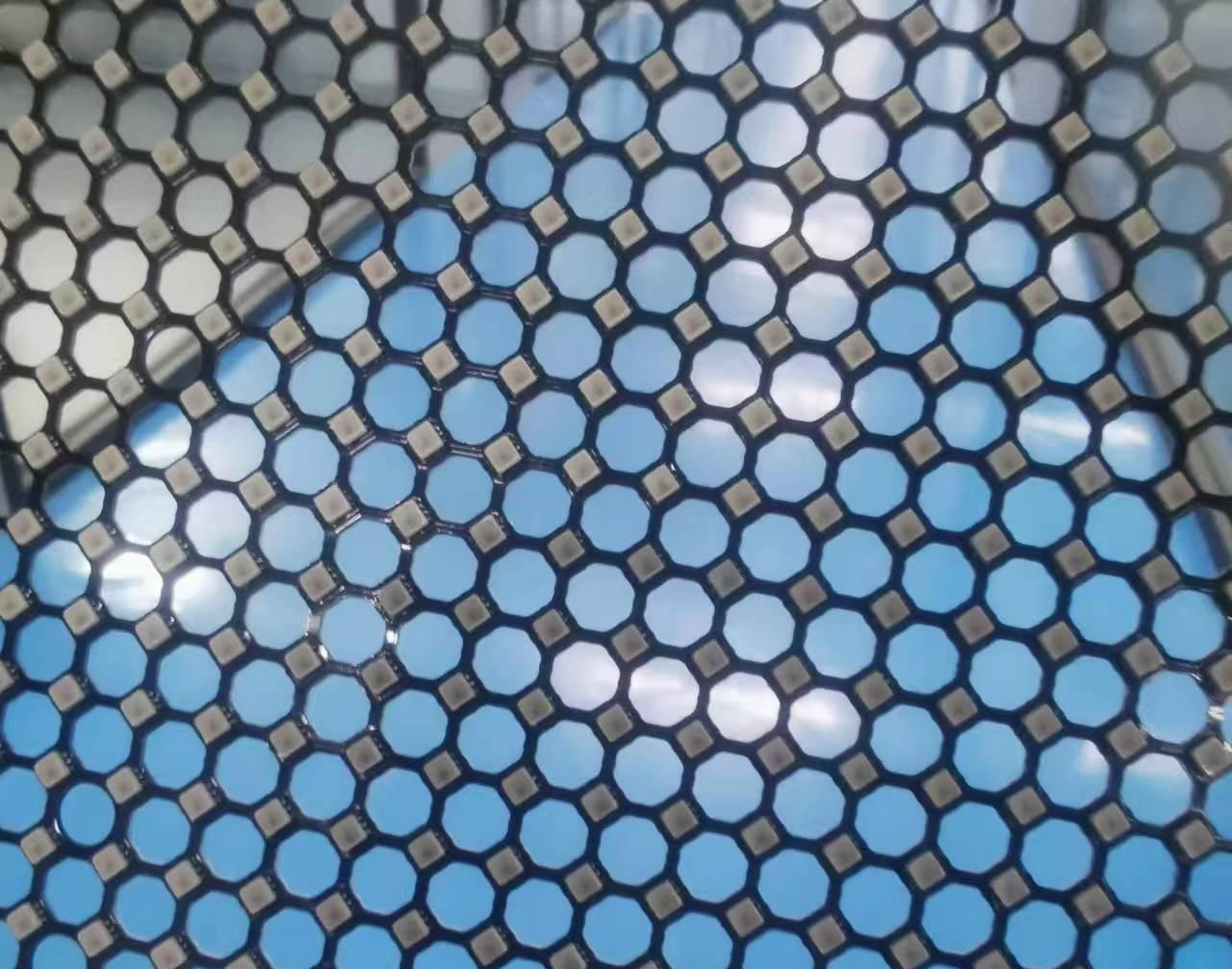
- Visual permeability: over 90%, preserving the transparency that glass curtain walls and shop windows depend on.
- Seamless splicing and ready-to-use installation, reducing on-site complexity for engineering teams working in operational transit environments.
- Holographic visual effect, producing stereoscopic and vivid pictures with bright colors through holographic technology that renders images with depth.
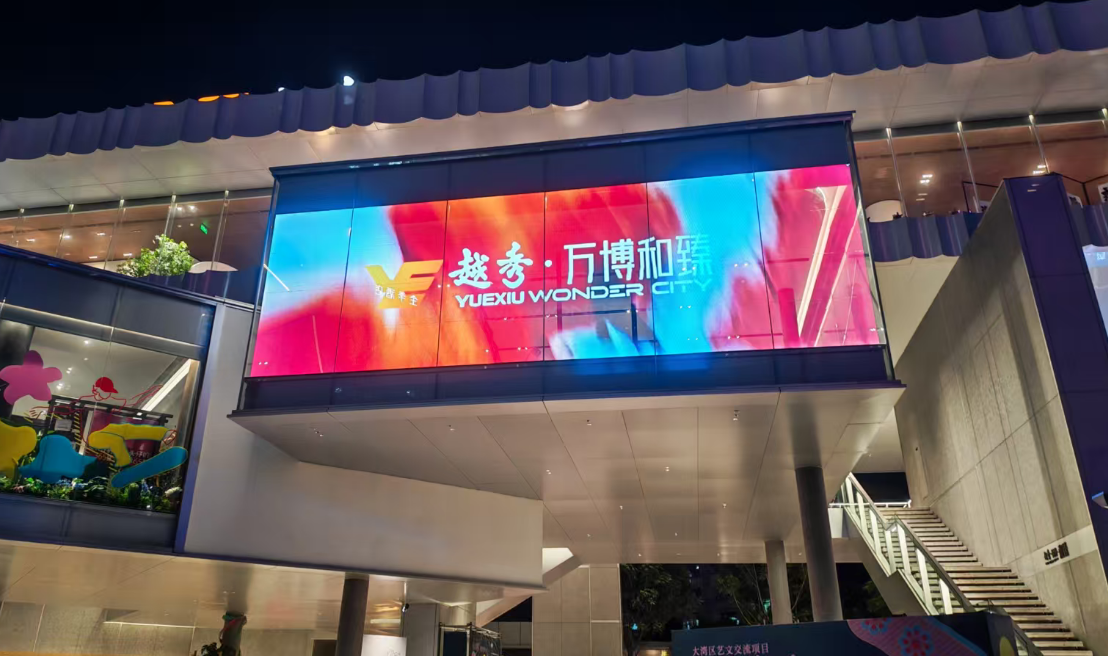
These specifications are directly relevant to transit hub deployment, where installations often span glass curtain walls, shop windows, and special-shaped scenes, and must also serve commercial activities and transit hubs specifically identified within the product’s industry adaptation.
Why Transparency Matters in High-Traffic Environments
Transit hubs are architecturally defined by glass—curtain walls, windows, partitions—that are intended to admit daylight and maintain visual continuity across large interior spaces. Installing a conventional opaque or thick display in such an environment compromises both the architectural intent and the passenger experience of openness. Shenzhen Showho was founded in 2015 around exactly this industry insight: that glass surfaces and creative installation scenarios require displays that stay transparent, light, and adaptable to curves, rather than displays that obstruct light or dominate sightlines.
Across its LED holographic screen series, Shenzhen Showho reports sensory permeability above 80%, with model-level visual permeability ranging from more than 70% to more than 99% depending on pixel pitch. The double-sided series specifically achieves over 90% visual permeability, placing it in the higher-transparency tier of the company’s broader holographic film screen lineup. This level of permeability allows the screen to function as active media when powered, while leaving daylight largely unaffected when turned off.
Engineering Behind the Transparency
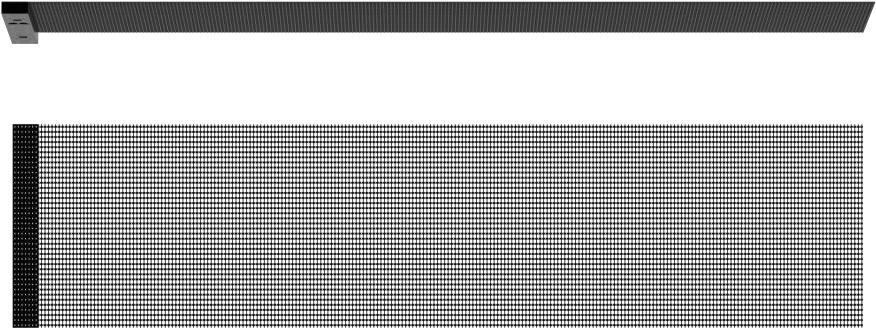
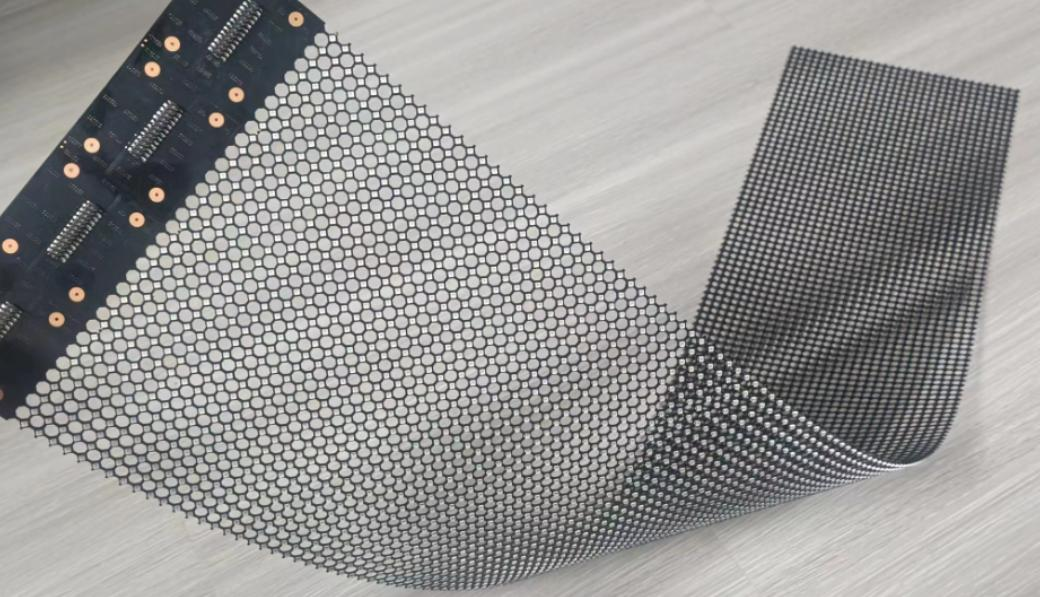
The ability to maintain both display performance and transparency rests on a frameless, lamp-driver integrated LED design combined with a PCB board built on hollow mesh circuitry. This construction keeps the panel body thin—below 2 mm across the series—and light enough for flexible mounting methods including adhesive mounting directly to glass, hanging display, and fixed installation. The same engineering also allows arbitrary cutting and bending, including curved installation with a radius greater than 600 mm, which supports corner screens, cylindrical surfaces, and S-shaped inner and outer arcs often found in transit hub architecture.
This technical foundation is not incidental. Shenzhen Showho maintains self-managed control over the full technology chain, from IC bare chip architecture and functional design, to LED bracket, LED packaging, and electronic circuit design. The company has also accumulated dozens of invention and utility model patents related to film screens, reflecting sustained in-house research rather than reliance on third-party component integration alone.
Practical Considerations for Transit Hub Deployment
Organizations evaluating transparent LED solutions for transit environments typically weigh several factors beyond transparency alone:
- Installation flexibility: The ability to adhere displays directly to existing glass, hang them, or fix them in place without major structural modification is particularly valuable in transit facilities where downtime and construction disruption carry high operational cost.
- Dual-content efficiency: A double-sided format allows a single physical installation to serve two distinct communication purposes—for example, directional or informational content on one face and promotional or brand content on the other—improving message targeting without doubling the footprint of hardware.
- Control system compatibility: Shenzhen Showho’s displays operate with Colorlight and NovaStar control systems, supporting both synchronous and asynchronous control, which allows integration flexibility for engineering teams managing broader facility media systems.
- Durability metrics: Across the LED holographic screen series, reported technical metrics include an IP rating better than IP45, average lifespan over 100,000 operating hours, MTBF over 10,000 hours, and a dead pixel rate of less than 1 in 10,000 with discrete distribution—factors relevant to the long operational demands of transit infrastructure.
From Domestic Rental Displays to Global Engineering Projects
Shenzhen Showho’s trajectory is instructive for understanding the maturity behind this product category. The company’s early stage focused on the domestic high-end rental display market, including XR virtual shooting screens and carbon fiber rental screens. In 2025, it established an overseas business unit and launched the Whaley-LED brand, extending OEM and ODM services to overseas commercial display and engineering projects. This progression—from integrated R&D and in-house production domestically to custom-engineered international projects—positions the company’s double-sided transparent LED technology as an offering shaped by iterative application across both rental and permanent installation contexts.
Customization Through OEM and ODM Services
Because transit hubs vary widely in glass geometry, structural load limits, and signage requirements, standardized panel sizes are rarely sufficient. Shenzhen Showho addresses this through OEM and ODM services, supported by self-managed research and development, structural design, and in-house production that together enable rapid response to specific project requirements. This includes custom sizes, cutting, bending, and curved installation, allowing a double-sided transparent display to be adapted to irregular glass structures, curved partitions, or free-standing installations common in transit architecture.
Conclusion
Double-sided transparent LED screens address a specific and well-defined need in transit hub environments: delivering independent, high-visibility content on two faces of a single installation without blocking natural light or compromising glass architecture. Shenzhen Showho’s LED Holographic Screen Double-Sided Display Series, developed under the Whaley-LED brand for overseas commercial display and engineering projects, combines sub-3 mm thickness considerations, over 90% visual permeability, and flexible mounting options with a documented history of in-house technical development. For facility planners and engineering teams evaluating transparent display options for transit environments, these specifications and the underlying OEM/ODM customization capability represent a concrete, technically grounded starting point for further evaluation.
http://www.whaleydisplay.com/
Shenzhen Showho (Whaley-LED) -
AuthorPosts

- You must be logged in to reply to this topic.