- This topic is empty.
-
AuthorPosts
-
17/08/2026 at 15:08 #14814
In analytical laboratories, sample preparation is often the first step that determines the reliability of the final result. Whether performing gravimetric analysis, trace metal determination, soil testing, environmental monitoring, food quality inspection, or chemical research, filtration quality directly affects measurement accuracy. Even a small amount of filter residue can introduce errors that compromise an entire analytical workflow.
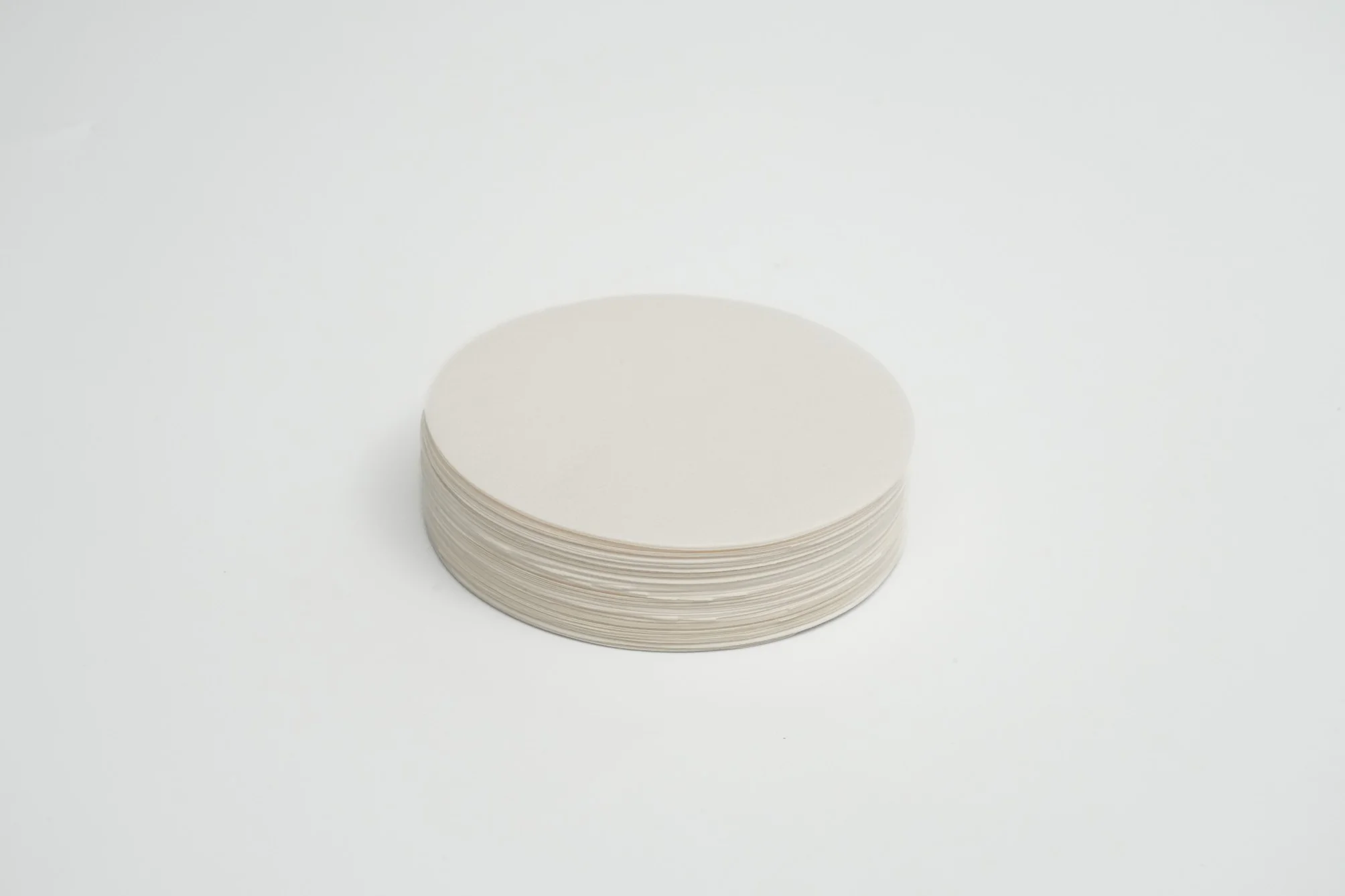
This is why ashless filter paper for lab analysis has become a standard consumable in laboratories that require high analytical precision. Unlike ordinary filter paper, ashless grades are manufactured from highly purified cellulose fibers and undergo specialized acid treatment to minimize inorganic residue after combustion. The remaining ash content is typically less than 0.01%, making the paper suitable for quantitative analytical methods where contamination must be minimized.
This article explains the technical characteristics of ashless filter paper, the key performance indicators laboratories should evaluate, and how selecting the appropriate filtration grade improves analytical consistency while reducing operational risk.
Why Ashless Filter Paper Matters in Quantitative Laboratory Analysis
Many laboratory testing methods require the filter paper to become part of the analytical process rather than simply separating solids from liquids.
In gravimetric analysis, for example, precipitates collected on the filter are dried, weighed, or even incinerated at temperatures exceeding 800°C. If the filter paper leaves excessive mineral residue after combustion, the remaining ash becomes part of the measured weight, producing inaccurate analytical results.
Ashless filter paper solves this problem by leaving an extremely small amount of inorganic residue after burning.
Typical applications include:
-
Gravimetric determination
-
Sulfate and silica analysis
-
Heavy metal testing
-
Water quality analysis
-
Soil and fertilizer analysis
-
Food composition testing
-
Pharmaceutical laboratory analysis
-
Metallurgical laboratories
-
Environmental monitoring
-
Research laboratories
For laboratories operating under ISO, GLP, or other quality management systems, using low-residue filtration media helps improve repeatability and supports reliable analytical documentation.
What Makes Ashless Filter Paper Different?
Although qualitative and quantitative filter papers may appear similar, their manufacturing processes differ significantly.
Ashless filter paper is produced from highly refined alpha-cellulose pulp. During manufacturing, impurities such as calcium, magnesium, iron, sodium, and other mineral components are removed through controlled purification processes.
The finished paper offers several important characteristics.
Extremely Low Ash Content
The defining feature is its residual ash after complete combustion.
High-quality ashless filter paper typically delivers:
-
Ash content below 0.01%
-
Minimal inorganic contamination
-
High combustion cleanliness
-
Stable analytical performance
For gravimetric methods, reducing residual ash directly improves weighing accuracy.
Uniform Fiber Distribution
Fiber consistency influences both filtration efficiency and particle retention.
Advanced papermaking processes produce homogeneous fiber networks that provide:
-
Stable filtration performance
-
Consistent pore distribution
-
Predictable flow rates
-
Excellent batch-to-batch repeatability
Uniform structure also reduces localized clogging during filtration.
High Wet Strength
Laboratory filtration often involves acidic, alkaline, or heated solutions.
A quality ashless filter paper for lab analysis maintains sufficient mechanical strength during filtration, allowing operators to transfer precipitates without tearing or fiber loss.
Higher wet strength also reduces sample loss during washing procedures.
Selecting the Correct Filtration Speed
Filtration speed is not simply a matter of efficiency. It directly influences particle retention and laboratory workflow.
Ashless filter papers are generally available in multiple filtration grades ranging from fast to slow.
Fast filtration grades are commonly used for coarse crystalline precipitates where throughput is more important than retaining ultrafine particles.
Medium-speed grades provide balanced performance for general quantitative laboratory work and are among the most widely used options.
Slow filtration grades feature finer pore structures capable of retaining very small particles. These papers are particularly suitable for fine precipitates such as barium sulfate or calcium oxalate, where complete particle recovery is essential.
Choosing an unnecessarily slow grade may extend filtration time without improving results, while selecting a grade that filters too quickly can allow fine particles to pass through. Matching filtration speed to the particle size distribution of the sample is therefore critical.
Particle Retention and Analytical Accuracy
Particle retention is one of the most important technical indicators when selecting ashless filter paper.
Retention capability depends on several factors:
-
Fiber diameter
-
Paper thickness
-
Pore size distribution
-
Manufacturing consistency
-
Surface structure
In quantitative laboratory analysis, incomplete particle retention can lead to underestimation of sample mass, directly affecting analytical accuracy.
For laboratories performing standardized testing procedures, consistent particle retention across production batches is equally important. Variations in filter paper performance can introduce unwanted variability into analytical data, making batch consistency a key purchasing consideration.
Chemical Purity Supports Reliable Results
Analytical laboratories frequently process aggressive chemical solutions.
Filter paper must remain chemically stable when exposed to:
-
Dilute acids
-
Dilute alkalis
-
Organic solvents
-
Salt solutions
-
Oxidizing agents used within recommended conditions
High-purity cellulose minimizes the risk of extractable contaminants entering the sample during filtration.
This becomes particularly important in trace analysis, where even very small amounts of contamination can influence instrument readings.
For laboratories performing elemental analysis using techniques such as ICP-OES or ICP-MS after sample preparation, filter paper purity contributes to lower background contamination and improved analytical confidence.
Dimensional Stability Improves Laboratory Efficiency
Precision filtration also depends on consistent paper dimensions.
High-quality ashless filter paper should maintain:
-
Uniform thickness
-
Flat surface geometry
-
Consistent basis weight
-
Stable diameter tolerances
-
Reliable folding characteristics
Dimensional consistency simplifies automated sample preparation while reducing handling errors during repetitive laboratory operations.
Whether using folded filters, gravity filtration, or Büchner funnels, stable paper dimensions improve overall workflow efficiency.
Typical Laboratory Applications
Ashless filter paper for lab analysis supports numerous industries where analytical accuracy is essential.
Environmental laboratories use it for suspended solids determination, soil composition analysis, and water quality monitoring.
Food testing laboratories rely on ashless paper during mineral analysis, contaminant testing, and nutritional composition studies.
Pharmaceutical quality control laboratories use quantitative filter paper for raw material testing, process validation, and formulation analysis, where low background residue is essential for reliable measurements.
Chemical manufacturing laboratories employ ashless filters during
http://www.tianjiaofilter.com
Nantong Tianjiao Filtration Materials Co., Ltd. -
-
AuthorPosts

- You must be logged in to reply to this topic.