- This topic is empty.
-
AuthorPosts
-
24/11/2026 at 18:00 #16090
Why Robotics Equipment Demands More Than a Generic Battery
Robotics equipment presents one of the most demanding environments for power systems. Unlike consumer electronics with standardized form factors, robotics applications require batteries that account for limited installation space, fluctuating peak-current draws from motors, and precise integration with sensors and control systems. According to Shanghai Mylion New Energy Co., Ltd., operating under the brand MYLION, many B2B customers in this space cannot utilize generic battery packs due to highly specific requirements spanning voltage, capacity, load current, BMS functions, cell chemistry, physical dimensions, connectors, and environmental safety certifications.
This gap between standardized battery offerings and the actual technical needs of robotics manufacturers is a persistent industry pain point. A battery that works electrically on paper may still fail in deployment if its mechanical footprint does not fit the chassis, if its BMS cannot handle the current spikes from servo motors, or if its connector does not match the charging architecture already built into the device.
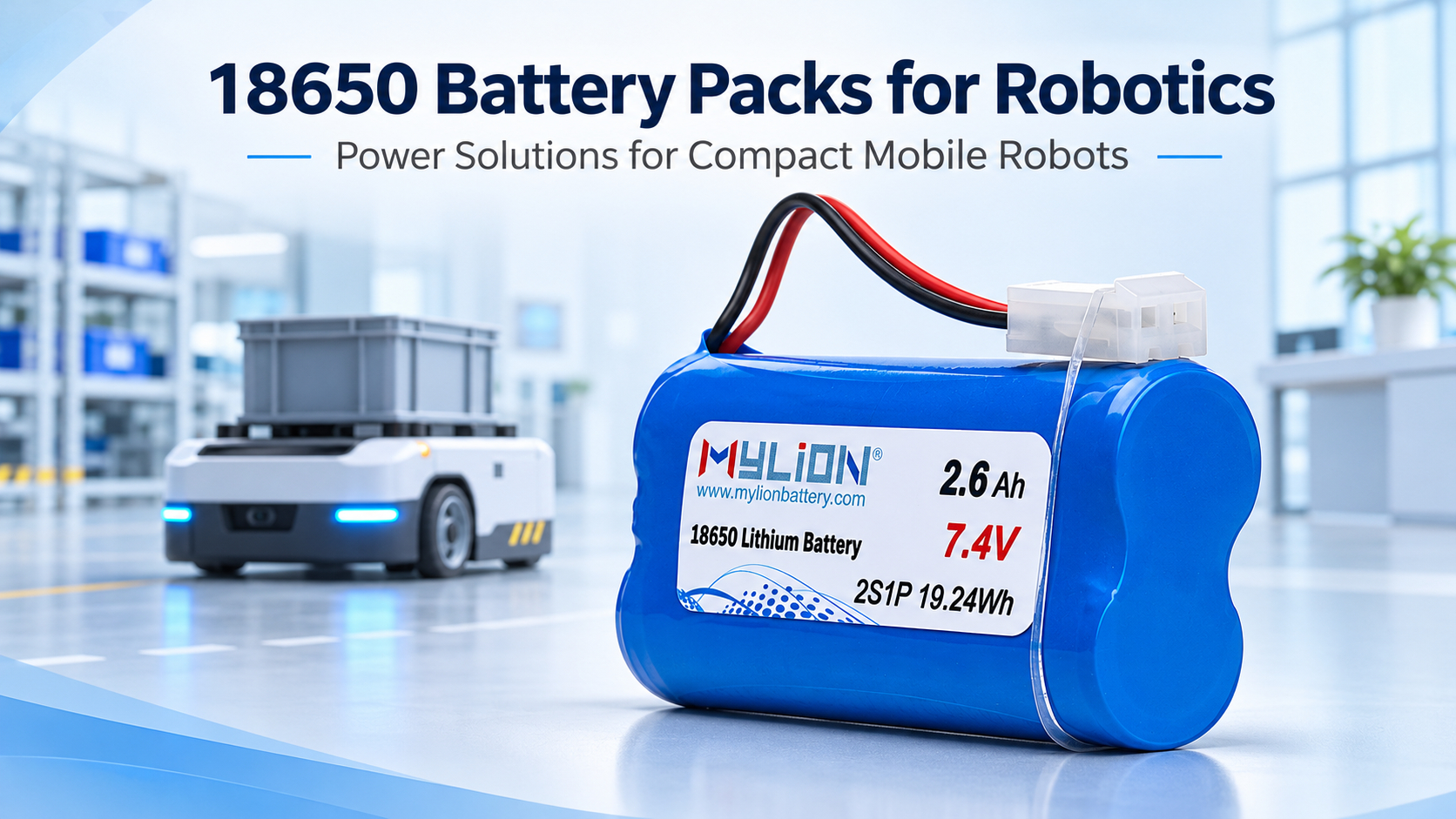
MYLION’s Engineering-Driven Approach
MYLION positions itself as an engineering-driven B2B lithium battery solution provider, with a strategic focus on custom battery-pack development and project execution rather than low-price retail sales. This is a meaningful distinction for robotics equipment manufacturers, who typically need a technical integration partner rather than a commodity supplier.
The company’s value proposition centers on evaluating the battery as an integral part of the customer’s entire system. This means MYLION considers:
- Real load conditions: Actual current draw patterns rather than theoretical specifications alone
- Charging source compatibility: Ensuring the charging infrastructure aligns with pack design
- BMS functions: Balancing, monitoring, and protection logic tailored to the application
- Mechanical interfaces: Enclosure, mounting, and insulation requirements specific to the device
- Production constraints: Feasibility for mass-production rather than one-off prototypes
By converting complex device requirements into technically reviewed, validated, and produced battery packs through a controlled engineering process, MYLION aims to reduce selection errors, thermal issues, and certification delays — three of the most common failure points in custom battery projects.
Custom Lithium Battery Pack Development for Robotics Applications
Within its product and service matrix, MYLION offers Custom Lithium Battery Pack Development, a project-based engineering service for B2B equipment manufacturers needing device-specific battery solutions. This offering is particularly relevant to robotics equipment, where incomplete or conflicting requirements regarding peak load, runtime, BMS functions, or mechanical structure can otherwise lead to project failure.
The differentiated value of this service includes:
Requirement Engineering: Scenario-based conversion of device inputs into reviewable specifications, which helps robotics manufacturers clarify ambiguous or conflicting technical requirements before committing to production.
System Matching: Integration of the battery, BMS, charger, and mechanical structure as a single system, rather than treating electrical parameters in isolation. For robotics equipment with sensors and motors operating in constrained spaces, this systems-level approach is critical.
Risk Control: Identification of technical blockers and validation needs prior to mass production, reducing the likelihood of costly redesigns after tooling has already been committed.
Key features supporting this process include custom voltage and capacity definition, chemistry selection based on project conditions, BMS matching for protection and communication functions, connector and interface customization, and mechanical integration covering enclosure, mounting, and insulation design.
Cylindrical and LiPo Formats for Compact Robotics Designs
Robotics equipment often requires compact, space-constrained battery integration. MYLION addresses this through its 18650 / 21700 / LiPo Custom Battery Packs product line, which is built for project-based custom packs using cylindrical or LiPo formats to match specific space, thermal, and safety requirements.
This matters directly for robotics applications, where devices frequently impose strict shape, peak-current, or cable-routing constraints that standard packs cannot meet. MYLION’s approach includes cell format selection — evaluating 18650, 21700, or LiPo formats based on device geometry — and compact device integration, which reviews size, cable position, and mounting as a unified assembly task rather than separate considerations.
Technical matching for current draw and BMS/protection review, along with final specification control through specification freeze and change control prior to mass production, further supports the reliability robotics manufacturers require.
Documented Experience with Smart Devices and Robotics
MYLION’s customer case history includes direct experience with smart devices and robotics equipment. The company describes this work as integration of batteries into limited space supporting sensors and motors, with resolution of risks related to peak-current and thermal constraints. This is consistent with the broader industry coverage MYLION serves, which includes industrial instruments, robotics, and automation as a named sector alongside smart home and IoT devices, security and monitoring equipment, and portable tools.
Technical Capabilities Supporting Robotics Integration
MYLION’s technical capabilities include expertise across LiFePO4, 18650/21700 cylindrical cells, and LiPo battery architectures. For robotics manufacturers, this breadth matters because different robotic platforms — from mobile robots to fixed automation arms — may call for different chemistries and formats depending on energy density, discharge rate, and space requirements.
Supporting technical metrics include custom series/parallel configuration, BMS matching encompassing balancing, monitoring, and protection, and specific current/peak-load management — directly relevant to the variable load profiles seen in robotics motor control.
Process and Delivery Model
MYLION’s service model spans OEM, ODM, sample development, private label, and project-based custom supply. The scope of service includes requirement analysis, feasibility review, solution definition, prototype development, testing support, specification approval, and mass-production coordination. Service assurance mechanisms include change-control management, version-controlled BOMs, and repeat-order supply coordination — elements that matter for robotics manufacturers running long product lifecycles with periodic design revisions.
Pricing follows a project-based quotation approach, issued after technical requirement confirmation and feasibility review, rather than fixed catalog pricing. This reflects the customized nature of each engagement.
Compliance and Documentation
For robotics equipment destined for global markets, transport and safety documentation are practical concerns. MYLION provides support for UN38.3 transport documentation and MSDS/SDS safety data sheets, along with project-specific technical documentation control, which assists equipment manufacturers navigating cross-border logistics and regulatory requirements.
Conclusion
For robotics equipment manufacturers, the central challenge is rarely finding "a battery" — it is finding a battery system engineered to match real load profiles, physical constraints, and production realities. MYLION’s structured process, spanning requirement definition through mass-production support, along with its specific experience addressing peak-current and thermal constraints in smart devices and robotics, positions the company as a technical partner for manufacturers seeking custom lithium battery solutions rather than off-the-shelf substitutes. With over 13 years of lithium battery industry experience, MYLION’s engineering model reflects an evolution from standard battery-pack supply toward a structured custom-battery engineering approach built around requirement definition, sample validation, and controlled specifications.
Shanghai Mylion New Energy Co.,Ltd. -
AuthorPosts

- You must be logged in to reply to this topic.