- This topic is empty.
-
AuthorPosts
-
02/09/2026 at 14:52 #15012
A fold-out solar system is judged on things a fixed array never is: how many people and how much equipment the deployment needs, how the mechanism behaves after fifty cycles in dusty conditions, and what happens when the site is cleared. From a procurement perspective those questions distinguish suppliers more usefully than the peak rating does. MPMC POWERTECH CORP., established in 2008 and headquartered in Shanghai Pudong, publishes an SPK series of mobile solar plants from 7.65 kWp to 231.84 kWp alongside a GSB series with an integrated slide-out array.
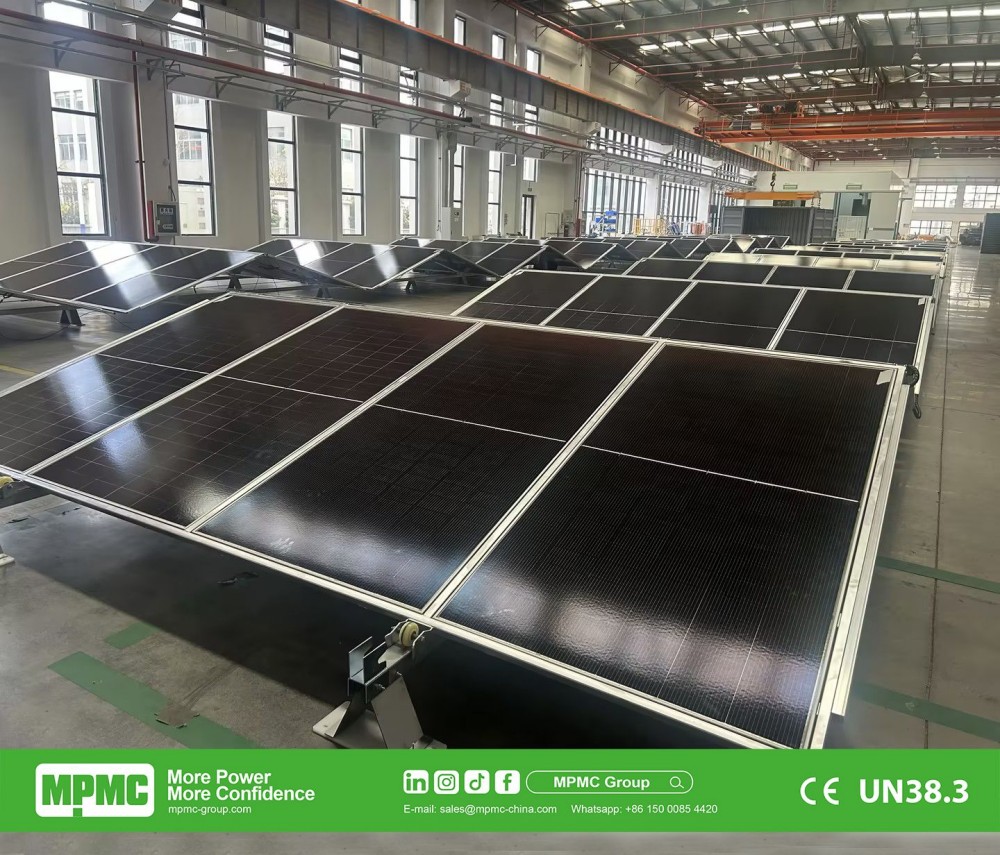
MPMC SPK-100 mobile solar array
Two Different Fold-Out Approaches
MPMC publishes the mechanism in two distinct product families, and they answer different requirements. The GSB series carries a 2,375 W slide-out array on a chassis that also holds a generator set and battery, which suits a site wanting one asset rather than a generation system. The SPK series is a dedicated solar plant where the array is the product, scaling from 7.65 kWp on the SPK-8A at 1,100 kg with automatic expansion up to 231.84 kWp in a 40HQP container at 30,000 kg.
The distinction matters commercially. An integrated chassis limits array size to what the vehicle can carry; a dedicated plant scales much further but needs its own pairing with storage or generation to be useful after dark.
What to Examine in a Fold-Out System
Element
Why it distinguishes suppliers
What to establish
Deployment method
Decides crew size and time on site
Whether expansion is automatic or manual, and how many people are needed
Transport weight
Determines what can reach the location
Published weight and container loading per model
Deployed footprint
Often the binding constraint, not the rating
Area required when fully opened, with orientation
Mechanism durability
Repeated cycles in dust are the failure mode
Expected deployment cycles and the maintenance regime
Ground requirement
Whether a prepared surface is needed
Bearing pressure and levelling tolerance
Pairing
Solar alone cannot run a site after dark
What storage or generation the supplier offers alongside
The deployment method row is where published figures differ most usefully. MPMC lists automatic expansion specifically on the SPK-8A, which is a different proposition from a container-shipped model requiring unloading, positioning and opening out.
Rating Is Rarely the Binding Constraint
Solar output depends on area, and area is what a container has least of until the array is opened. The figures worth extracting are therefore weight and deployed footprint rather than peak rating.
A 30,000 kg unit requires lifting capacity, a transport route and ground bearing that a remote site may not have, and the deployed array needs clear space with the right orientation. Confirming both before capacity is fixed avoids selecting a system the site cannot receive.
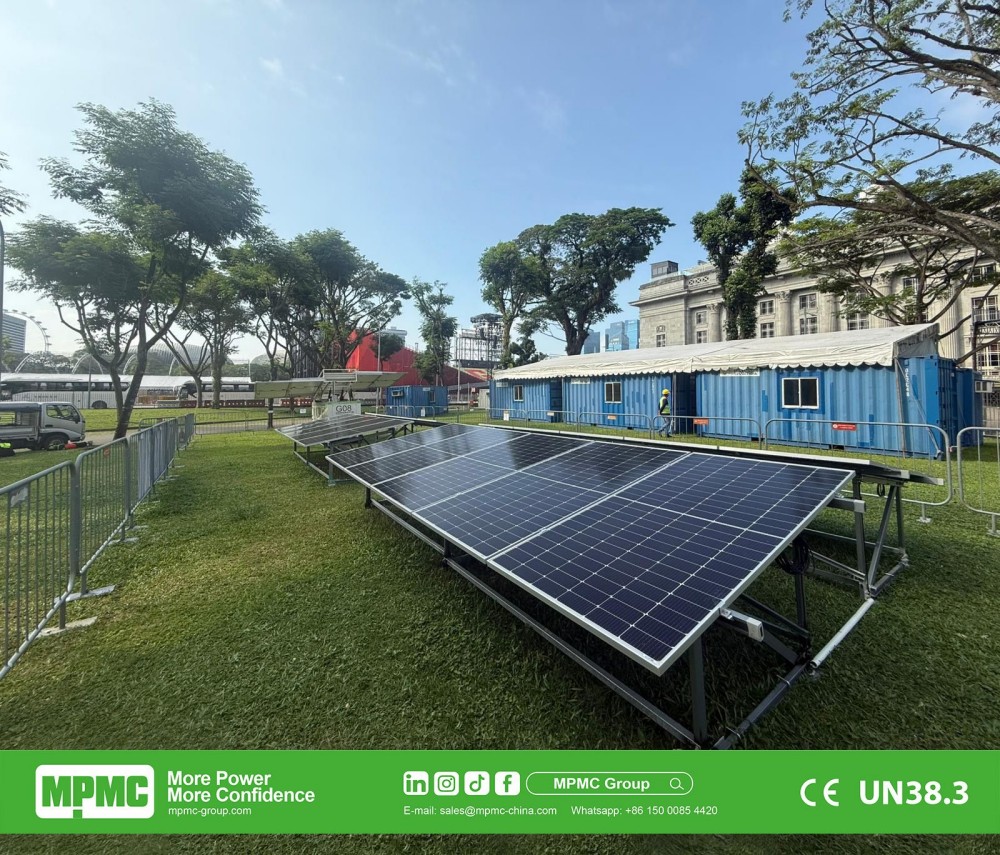
MPMC GSB-30 hybrid power station
What the System Must Be Paired With
An array generates while the sun is up and nothing afterwards, so a fold-out plant is one element of an arrangement rather than the whole answer. A supplier offering only the array leaves the buyer to solve the harder half.
MPMC lists a GSB series from 10 to 120 kVA maximum output with 20.4 to 112.5 kWh of battery capacity for smaller loads, a GB series covering the same band without the array for sites adding solar later, and for larger arrangements an HBD-R storage series from 30 kW to 610 kW continuous alongside containerised generation from 800 to 3,750 kVA.
Durability of the Mechanism Itself
A fold-out array has moving parts that a fixed installation does not, and those parts operate in the conditions that made a deployable system necessary in the first place. Dust in hinges and rails, wind loading during deployment and repeated cycling are the failure modes worth asking about.
Two practical questions separate suppliers here: how many deployment cycles the mechanism is expected to complete, and what maintenance it requires between them. Neither appears on a rating table, and both determine whether the asset survives a portfolio of short projects.
Output Falls Away From the Nameplate
Soiling reduces photovoltaic output progressively rather than suddenly, which on a dusty remote site turns cleaning into an operational task. An array performing to expectation in week one may not by week six unless the regime keeps pace, and a fold-out array frequently sits lower to the ground than a fixed one, which can worsen the effect.
High ambient temperature reduces panel efficiency separately, and paired storage carries its own limits: MPMC lists −20°C to +55°C with derating above 45°C on the HBD-A series and −20°C to +50°C on the HBD-R series. Specifying margin above the strict requirement is what absorbs both between service visits.
Where the Combination Is Documented
MPMC lists a Kenyan microgrid programme of 6 MW across four sites, each with more than 1 MW of solar generation, at least 1 MWh of DC-coupled battery storage rated at 80% depth of discharge and 6,000 cycles with dual-unit redundancy, and diesel backup of two 500 kW plus two 250 kW units per site. An Australian mining programme is listed at 14.7 MW using 245 GSB hybrid power stations.
These describe the class of project delivered rather than an output expectation for another site, whose generation follows its own irradiation, soiling and demand pattern.
Supplier Assessment Points
• Establish whether expansion is automatic or manual, and the crew size required.
• Confirm deployed footprint, weight and lifting arrangement for the specific model.
• Verify transport route, ground bearing and lifting capacity at the site.
• Ask how many deployment cycles the mechanism is designed for.
• Establish what maintenance the mechanism requires between deployments.
• Confirm what storage or generation the supplier offers to pair with the array.
• Allow output margin for soiling and high ambient temperature.
• Establish the daily energy requirement after dark, not only the daytime load.
https://www.mpmc-group.com/
MPMC Powertech Corp. -
AuthorPosts

- You must be logged in to reply to this topic.