- This topic is empty.
-
AuthorPosts
-
14/07/2026 at 09:53 #14385
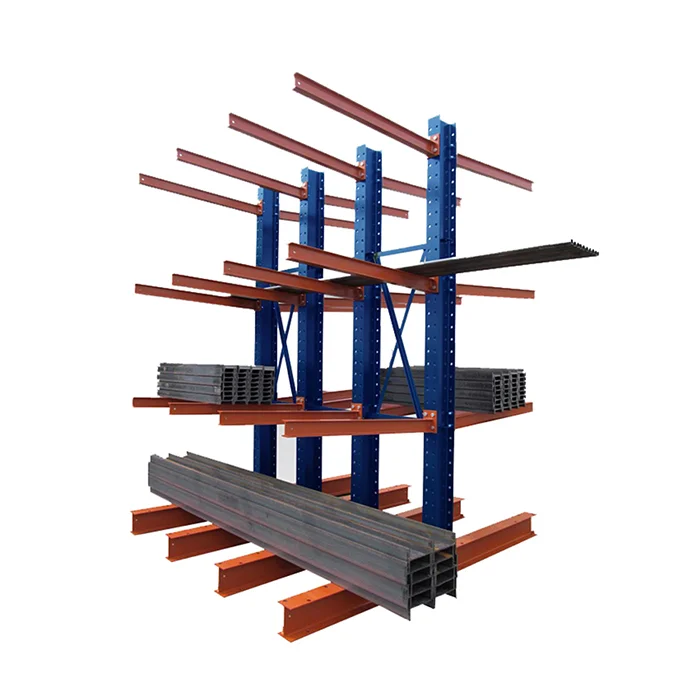
In many industrial environments, storing long and irregular materials efficiently is still a challenge. Traditional pallet racks often cannot provide the flexibility needed for items such as timber, steel pipes, metal profiles, and large panels. These materials usually require open access, strong support structures, and adjustable storage positions.
This is where industrial cantilever racks and cantilever lumber racks provide practical advantages. Their open-front design allows operators to load and remove materials easily, while adjustable arms make it possible to handle different sizes and weights without changing the entire storage system.
Nanjing A-Plus Metal Products Co., Ltd. (A-Plus) has specialized in manufacturing industrial cantilever racks since 2016. The company focuses on engineering design, customized production, and strict quality control to provide durable storage solutions for industries including timber processing, metal fabrication, and logistics warehousing.
This article discusses how cantilever racks are designed, how their load capacity is determined, and why proper configuration is important for long-term warehouse safety.
Understanding the Structure of Industrial Cantilever Racks
The main difference between cantilever racks and traditional storage racks is the open-front structure. Instead of using front beams to support materials, cantilever racks rely on vertical columns and horizontal arms extending outward.
This structure creates a clear loading area, making it easier to store and access long products such as lumber, steel bars, pipes, and sheet materials.
Upright Columns: The Foundation of Rack Stability
The upright column is one of the most important components because it carries the main vertical load and provides overall stability.
Important design factors include:
-
Material selection: High-strength carbon steel or alloy steel with tensile strength typically between 350–500 MPa.
-
Steel thickness: Usually 3–6 mm depending on the required loading capacity.
-
Height and base design: The ratio between column height and base width must be optimized to reduce tipping risks.
-
Cross-bracing structure: Additional bracing improves lateral stability, especially for double-sided cantilever racks.
A-Plus applies tensile testing and finite element analysis during product development to verify structural performance. For example, a 4-meter upright designed for timber storage can support more than 3000 kg per column when properly configured with suitable bracing.
Horizontal Arms: Supporting Different Material Requirements
The horizontal arms directly support stored materials, so their strength and adjustment capability are critical.
Typical specifications include:
-
Adjustable arm length: Commonly from 600 mm to 1500 mm.
-
Arm thickness and profile: Usually 5–8 mm with reinforced sections for heavier loads.
-
Load capacity: Approximately 200–600 kg per arm depending on design.
-
Custom spacing: Arm positions can be adjusted to distribute weight more effectively.
Different materials require different support methods. For example, long steel profiles may need closer arm spacing to prevent bending, while timber storage may require wider spacing for efficient handling.
A-Plus provides customized arm configurations based on warehouse layout, material type, and customer operating requirements.
Adjustable Design for Changing Storage Needs
One of the biggest benefits of cantilever racks is flexibility. Warehouses often store materials with different lengths and dimensions, so fixed storage systems can quickly become inefficient.
Flexible Arm Adjustment
Cantilever rack arms can usually be adjusted vertically in 50–100 mm increments. This allows operators to create suitable storage levels for different materials.
Benefits include:
-
Better use of vertical warehouse space;
-
Reduced empty storage areas;
-
Improved weight distribution;
-
Easier adaptation when inventory changes.
The modular structure also allows horizontal and vertical expansion when future storage capacity needs increase.
Different Rack Configurations
Depending on warehouse conditions, several configurations are available:
-
Single-sided cantilever racks: Suitable for placement against walls or in narrow storage areas.
-
Double-sided cantilever racks: Allow access from both sides and improve storage density.
-
Multi-tier cantilever racks: Increase vertical storage capacity while maintaining safe load limits.
Selecting the correct configuration depends on available floor space, material handling equipment, and storage requirements.
Durability and Safety Considerations
In industrial warehouses, racks are exposed to daily loading operations, forklift movement, and environmental conditions. Therefore, durability is not only about carrying weight but also about maintaining performance over years of use.
Material Quality and Surface Protection
Common durability measures include:
-
High-strength carbon steel or alloy steel construction;
-
Hot-dip galvanization or powder coating for corrosion resistance;
-
Fatigue testing to simulate repeated loading conditions.
For outdoor storage areas or humid environments, corrosion protection becomes especially important because rust can gradually weaken structural components.
Installation and Safety Requirements
Proper installation is essential for achieving the designed load capacity.
Important safety practices include:
-
Using industrial-grade floor anchors to secure upright columns;
-
Installing cross-bracing to improve stability;
-
Clearly marking load limits;
-
Performing regular inspections.
Operators should regularly check for signs of corrosion, bent arms, damaged bolts, or structural deformation.
Applications Across Different Industries
Timber and Lumber Storage
Cantilever lumber racks are widely used in timber-related industries because their open design allows easy access to long boards and wooden materials.
Advantages include:
-
Adjustable arms for different board lengths;
-
Heavy-duty columns supporting large material stacks;
-
Faster loading and unloading compared with enclosed rack systems.
For timber warehouses, the ability to quickly identify and remove specific materials can significantly improve daily workflow.
Metal Fabrication and Pipe Storage
Metal products often require specialized storage because long profiles can bend if they are not properly supported.
Cantilever racks provide:
-
Adjustable arm spacing to match different steel lengths;
-
Strong load-bearing capability for heavy metal products;
-
Protective coatings for improved corrosion resistance.
Double-sided designs are also useful in fabrication workshops where space utilization is important.
Logistics and Distribution Warehouses
Large warehouses often need flexible systems that can adapt to changing inventory.
Multi-tier cantilever racks can increase storage density, while open access makes forklift operation easier and safer.
These systems help reduce floor clutter and create a more organized material handling process.
Practical Guidelines for Safe Operation
Even the strongest cantilever rack requires proper usage and maintenance.
Recommended practices include:
-
Distribute loads evenly across arms to avoid excessive bending;
-
Inspect racks regularly for damage or corrosion;
-
Never exceed the rated load capacity;
-
Replace damaged components immediately;
-
Check bolts and connections during maintenance inspections.
A-Plus provides installation guidance and verification support to help customers ensure their rack systems meet operational and safety requirements.
Factors to Consider When Purchasing Cantilever Racks
When selecting an industrial cantilever rack, companies should evaluate more than just initial cost.
Important considerations include:
Load Requirements
The upright structure and arm capacity must match the weight and dimensions of stored materials.
Storage Flexibility
Adjustable arms and modular designs provide better long-term value because they can adapt to changing inventory.
Material and Coating Quality
High-quality steel and proper surface protection help extend service life and reduce maintenance requirements.
Safety Standards
Companies should confirm that rack designs meet relevant industrial safety requirements, including applicable DIN or ISO standards.
Long-Term Return on Investment
A well-designed cantilever rack system can reduce storage problems, improve workflow, and lower replacement costs over time.
A-Plus provides customized engineering services, including 3D modeling, prototype testing, and installation support, helping customers develop storage solutions based on their actual warehouse conditions.
Technical Examples of Cantilever Rack Configurations
Rack Type Upright Height Arm Length Max Load/Arm Max Load/Column Material Single-sided lumber rack 4 m 1200 mm 400 kg 2500 kg Carbon steel, galvanized Double-sided steel profile rack 3.5 m 1000 mm 350 kg 2000 kg Alloy steel, powder coated Heavy-duty multi-tier rack 5 m 1500 mm 600 kg 3000 kg Carbon steel, galvanized These examples show how A-Plus adjusts rack structures according to different material types, warehouse conditions, and load requirements.
Final Thoughts
Industrial cantilever racks are an effective solution for storing long, heavy, and irregular materials that cannot be handled efficiently by traditional storage systems.
By combining strong structural design, adjustable configurations, durable materials, and proper safety practices, cantilever racks help companies improve warehouse organization while maintaining reliable long-term performance.
For industries such as timber processing, metal fabrication, and logistics, choosing the right rack design is not only a storage decision but also an investment in safety, productivity, and operational efficiency. With customized engineering support from Nanjing A-Plus Metal Products Co., Ltd. (A-Plus), businesses can build storage systems that match their specific requirements.
http://www.aplusracking.com
Nanjing A-Plus Metal Products Co., Ltd. -
-
AuthorPosts

- You must be logged in to reply to this topic.