- This topic is empty.
-
AuthorPosts
-
03/07/2026 at 15:03 #14314
In the steel reinforcement processing industry, productivity bottlenecks in stirrup fabrication have long plagued construction teams. Manual bending operations typically achieve only 400 units per hour, accompanied by inconsistent angles and high labor intensity. For project managers seeking to optimize workflow efficiency while maintaining dimensional accuracy, selecting the right automated stirrup bending machine has become a critical decision.
The Labor Crisis in Traditional Stirrup Production
Traditional stirrup manufacturing faces three core challenges that directly impact project timelines and budgets. First, manual bending requires sustained physical effort from skilled workers, with each operator managing 6-8mm diameter rebars through repetitive motions that lead to fatigue-induced errors. Second, angle consistency remains problematic – manual tools cannot guarantee uniform 90-degree bends across thousands of stirrups, creating quality control issues during structural inspections. Third, throughput limitations create cascade delays when large-volume orders coincide with tight construction schedules.
Industry data reveals that conventional stirrup fabrication consumes 35-40% of total rebar processing time on typical building projects. This inefficiency becomes particularly acute in infrastructure construction, where standardized 200x200mm stirrups for bridge piers or subway station frameworks may require tens of thousands of identical units within compressed delivery windows.
Automated Solutions: Technology Architecture
Modern CNC stirrup bending machines address these pain points through integrated mechanical systems combining four critical functions: straightening, precision measuring, multi-angle bending, and automatic cutting. The operational workflow begins with coiled rebar feeding into dual straightening roller assemblies, where alloy die steel wheels apply calibrated pressure to eliminate inherent curvature from factory coiling processes.
Servo-driven metering wheels then advance the straightened bar through precision increments, utilizing PLC numerical control to achieve ±1mm length accuracy. This dimensional control proves essential for structural applications where stirrup spacing directly affects concrete pour quality and load distribution. At the bending station, programmable rotating heads execute pre-programmed angle sequences – typically forming rectangular or trapezoidal shapes through sequential 90-degree or 135-degree bends.
The final stage employs hydraulic shear mechanisms to sever completed stirrups cleanly, with cutting force sufficient to process bars up to 16mm diameter without generating burrs that could compromise concrete bonding. Advanced models incorporate touch-screen interfaces storing 100+ preset patterns, enabling operators to switch between stirrup specifications through simple database retrieval rather than manual recalibration.
Performance Benchmarks: Quantified Productivity Gains
Real-world deployment data demonstrates substantial efficiency improvements over manual methods. The SGW12D series fully automatic stirrup bending machines achieve production rates of 1,400 units per hour for standard configurations – representing a 3.5x throughput increase compared to manual fabrication. This performance stems from dual-line processing architecture, where two bars undergo simultaneous straightening and bending cycles to double production capacity.
In building construction applications, rebar processing teams report workforce reductions from 6 operators to 2-3 personnel while maintaining or exceeding previous output volumes. One benchmark case involved residential project stirrup production, where machine deployment enabled a three-person crew to complete daily quotas previously requiring nine workers, translating to labor cost savings exceeding 65% when accounting for wage expenses and overtime elimination.
For infrastructure projects with complex stirrup geometries, specialized equipment like the SGW16D-3D-4 three-dimensional bending machine handles non-planar configurations through rotating gear plate mechanisms. This capability proves critical in bridge construction, where box girder reinforcement cages require stirrups with out-of-plane bends that manual tools cannot replicate consistently.
Durability Engineering: Component Selection Standards
Long-term operational reliability hinges on component quality specifications that separate industrial-grade equipment from budget alternatives. Premium stirrup machines utilize enclosed turbine-shaft gearbox designs providing water and dust ingress protection – essential for construction site environments where airborne particulates and moisture exposure cause premature bearing failures in unsealed transmissions.
The straightening and metering subsystems employ alloy die steel wheels with hardened surfaces, extending wear life to multi-year operation even under continuous duty cycles processing abrasive rebar surfaces. Comparative analysis shows these hardened components maintain dimensional accuracy 4-5 times longer than standard carbon steel alternatives, reducing recalibration frequency and minimizing production interruptions.
Hydraulic shear heads incorporate enlarged cutting surfaces capable of batch processing multiple bars simultaneously, replacing labor-intensive manual shears while delivering clean cuts that eliminate secondary deburring operations. Electrical control systems standardize on industrial-grade components – including Schneider contactors and protection relays – ensuring consistent performance and simplified maintenance through globally available replacement parts.
Integration Capacity: Production Line Connectivity
Modular equipment design enables seamless integration with upstream and downstream processing stations. Stirrup machines equipped with integrated material racks featuring PLC-controlled storage platforms facilitate direct transfer from cutting lines, eliminating manual handling between workstations. This automated material flow reduces cycle time losses and minimizes workplace injury risks associated with repetitive lifting of heavy bar bundles.
For large-scale rebar fabrication facilities, stirrup bending stations connect to multi-level sorting systems that automatically route finished products into specification-segregated compartments. This automated classification streamlines order fulfillment, particularly for projects requiring multiple stirrup sizes where manual sorting traditionally consumed 15-20% of total processing time.
The compact footprint of advanced stirrup machines – typically 4-6 meters in length – accommodates installation in space-constrained environments including urban construction sites and prefabrication workshops. Mobility features such as integrated lifting points and wheeled bases enable equipment relocation between project zones, providing deployment flexibility unattainable with fixed industrial machinery.
Operational Simplification: Skill Requirement Reduction
Automated stirrup production substantially lowers operator training thresholds compared to manual bending techniques. One-touch operation interfaces allow workers to recall preset specifications from equipment databases, initiating fully automated processing cycles without manual intervention. This programming approach eliminates the apprenticeship periods traditionally required to develop consistent manual bending skills.
Real-time monitoring capabilities provide immediate feedback when material dimensions deviate from preset parameters, with automatic alert systems notifying operators of length discrepancies or diameter variations before defective production occurs. This intelligent fault tolerance prevents batch rejections that plague manual operations, where detection of dimensional errors often happens only during post-production inspection.
Safety enhancements inherent to automated systems include physical guarding around bending zones and overload protection circuits that halt operations upon detecting material jams or abnormal resistance. These features reduce workplace injury rates associated with manual bending tools, where hand placement near forming points creates pinch and crush hazards.
Strategic Equipment Selection Criteria
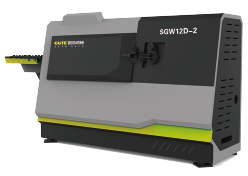
When evaluating stirrup bending machines, purchasers should prioritize three critical specifications beyond baseline production speed. First, assess straightening system capacity – inadequate roller pressure or insufficient wheel diameter leads to residual curvature in finished stirrups, causing assembly difficulties during cage fabrication. Second, verify servo system closed-loop feedback implementation, which ensures positioning accuracy remains stable across extended production runs rather than drifting due to mechanical backlash. Third, examine hydraulic shear head design – undersized cutting surfaces accelerate blade wear and generate rough edges requiring secondary finishing.
The distinction between mid-range and premium equipment often manifests in component durability rather than headline specifications. Machines utilizing standardized industrial components – such as Taiwanese pneumatic systems and established servo motor brands – deliver lower total cost of ownership through extended service intervals and simplified repair logistics compared to proprietary subsystems requiring manufacturer-specific parts.
Conclusion: Quantified Value Proposition
For construction enterprises and rebar processing centers facing labor cost pressures and productivity demands, modern CNC stirrup bending machines deliver measurable returns through workforce reduction, throughput multiplication, and quality consistency improvements. The technology transition from manual to automated stirrup fabrication represents not merely equipment upgrading, but fundamental workflow optimization that repositions steel processing from labor-intensive craft to precision manufacturing.
Project teams implementing automated stirrup production report typical payback periods of 8-14 months when accounting for labor savings, productivity gains, and waste reduction. As construction industry labor availability continues tightening while project complexity increases, the strategic value of reliable automated bending equipment extends beyond immediate cost metrics to encompass competitive positioning and delivery capability assurance.
https://www.gutemachinery.com/
CHENGDU GUTE MACHINERY WORKS CO.,LTD -
AuthorPosts

- You must be logged in to reply to this topic.