- This topic is empty.
-
AuthorPosts
-
07/04/2026 at 14:48 #13432
In the FPV drone building world, one of the most important decisions that directly impacts performance, reliability, and maintenance is the choice of Electronic Speed Controllers (ESCs). Among modern FPV setups, builders typically choose between two main configurations: the 4-in-1 ESC and individual ESCs (also called single ESCs mounted per motor).
Both systems perform the same essential job—controlling motor speed and delivering power from the battery to the motors—but they differ significantly in design, wiring complexity, durability, repairability, and thermal performance.
As FPV drones evolve toward lighter frames, higher power demands, and more compact builds, the debate of 4-in-1 ESC vs individual ESCs has become even more relevant. This article provides a deep comparison to help you decide which option is best for your FPV build.
What Is a 4-in-1 ESC?
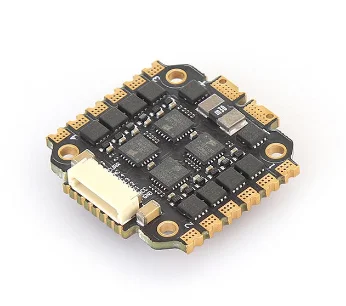
A 4-in-1 ESC is an integrated circuit board that combines four separate ESC channels into a single compact unit. Instead of installing four individual ESCs on each arm of the drone, all motor controllers are placed on one board, usually mounted under or near the flight controller.
Each channel still operates independently, but they share the same PCB, power input, and sometimes capacitors and current sensors.
Key Features of 4-in-1 ESCs
-
All four motor controllers integrated into one board
-
Centralized power input from battery
-
Clean wiring setup with minimal soldering
-
Typically stacked with flight controller
-
Designed for 3–5 inch FPV drones
Because of their compact design, 4-in-1 ESCs have become the standard choice for most modern FPV freestyle and racing builds.
What Are Individual ESCs?
Individual ESCs are separate units, with one ESC dedicated to each motor. These are mounted individually on each drone arm and connected to the flight controller and power distribution system.
Before 4-in-1 ESCs became popular, this was the standard configuration for almost all multirotors.
Key Features of Individual ESCs
-
One ESC per motor (4 ESCs total in a quad)
-
Mounted directly on drone arms
-
Requires power distribution board (PDB) or wiring harness
-
More wiring but modular design
-
Easier to replace single components
Even though they are less common today in small FPV builds, individual ESCs are still widely used in larger drones and industrial UAV systems.
Core Differences Between 4-in-1 and Individual ESCs
To understand which is better, it is important to compare them across key performance and usability factors.
1. Build Complexity and Wiring
4-in-1 ESC Advantage: Clean and Simple Builds
One of the biggest reasons FPV pilots prefer 4-in-1 ESCs is simplicity. With a single board:
-
Fewer solder joints are required
-
Wiring is shorter and cleaner
-
Less chance of wiring mistakes
-
Faster drone assembly
This is especially beneficial for beginners or compact racing drones where space is limited.
Individual ESC Challenge: More Wiring and Complexity
Individual ESCs require:
-
Four separate power connections
-
Four signal wires to the flight controller
-
Additional power distribution board or wiring setup
This increases build time and introduces more potential failure points due to solder joints and cable routing.
Conclusion:
4-in-1 ESCs clearly win in build simplicity and clean installation.
2. Weight and Space Efficiency
4-in-1 ESCs: Compact and Lightweight
Since all ESCs are combined into a single board, 4-in-1 systems reduce:
-
Overall wiring weight
-
Redundant PCB material
-
Frame space usage
This makes them ideal for:
-
5-inch freestyle drones
-
Lightweight racing builds
-
Compact cinematic FPV drones
Individual ESCs: Slightly Heavier Setup
While individual ESCs themselves are small, the added wiring and power distribution system increase total weight and volume.
However, in larger drones (7-inch and above), this difference becomes less significant.
Conclusion:
4-in-1 ESCs are better for compact and lightweight builds.
3. Reliability and Failure Risk
4-in-1 ESC Trade-Off: One Board = One Point of Failure
The biggest drawback of 4-in-1 ESCs is risk concentration:
-
If one part of the board fails, the entire ESC unit may need replacement
-
A severe crash can damage multiple channels at once
-
Repairs often require full board replacement
This is often called the “all eggs in one basket” problem.
Individual ESC Advantage: Modular Failure Isolation
With individual ESCs:
-
Only the damaged ESC needs replacement
-
The remaining three motors remain unaffected
-
Repairs are cheaper and faster
This makes individual ESCs more attractive for crash-prone environments or heavy-use drones.
Conclusion:
Individual ESCs win in repairability and failure isolation.
4. Thermal Performance and Heat Dissipation
4-in-1 ESC Heat Concentration
Because all four ESCs share one PCB:
-
Heat is concentrated in a single location
-
Cooling depends heavily on airflow inside the frame
-
High throttle flights may increase thermal stress
This is especially noticeable in:
-
Hot climates
-
Heavy freestyle flying
-
Long sustained throttle usage
However, modern designs use improved copper layers and thermal vias to reduce overheating risks.
Individual ESC Cooling Advantage
Individual ESCs are mounted on drone arms, which provides:
-
Better airflow exposure
-
Natural cooling from prop wash
-
Reduced thermal concentration
This makes them more suitable for high-power or long-endurance drones.
Conclusion:
Individual ESCs generally provide better thermal performance.
5. Performance and Electrical Efficiency
In terms of pure flight performance:
-
Both systems perform similarly when properly rated
-
ESC firmware (BLHeli_32, Bluejay, etc.) matters more than layout
-
Voltage handling depends on component quality, not configuration
However:
-
4-in-1 ESCs benefit from shared capacitors and optimized power layout
-
Individual ESCs reduce electrical interference between channels
Conclusion:
Performance is mostly equal, with minor situational advantages for both.
6. Maintenance and Repair Costs
4-in-1 ESC Maintenance Cost
-
High replacement cost if entire board fails
-
Often requires full disassembly of stack
-
Limited repair options
Individual ESC Maintenance Advantage
-
Replace only the broken ESC
-
Lower long-term maintenance cost
-
Easier troubleshooting
For pilots who crash frequently, this difference becomes very important.
7. Best Use Cases
When to Choose 4-in-1 ESCs
4-in-1 ESCs are ideal for:
-
3–5 inch FPV freestyle drones
-
Racing drones
-
Cinematic compact builds
-
Beginners who want easier assembly
-
Lightweight and clean builds
They dominate the modern FPV market for good reason: simplicity and efficiency.
When to Choose Individual ESCs
Individual ESCs are better for:
-
7-inch and larger drones
-
Long-range FPV platforms
-
Heavy payload drones
-
Industrial or agricultural UAVs
-
High-current continuous load applications
They excel where heat management and redundancy matter most.
8. Real-World Industry Trend
Today, most FPV builders use 4-in-1 ESCs for mainstream builds because:
-
Frames are designed around stack systems
-
Wiring simplicity improves reliability
-
Manufacturing costs are lower
-
Compact drones are more popular
However, individual ESCs are not obsolete. Instead, they have shifted toward niche but critical roles in larger UAV systems.
In many professional setups, engineers even combine both systems depending on mission requirements.
Final Verdict: Which Is Better?
There is no absolute winner in the 4-in-1 ESC vs Individual ESCs debate. The best choice depends on your drone size, flying style, and maintenance expectations.
Choose 4-in-1 ESC if you want:
-
Clean and simple builds
-
Lightweight FPV drones
-
Fast assembly
-
Compact design
Choose Individual ESCs if you want:
-
Maximum repair flexibility
-
Better cooling performance
-
High-power or large drone builds
-
Long-term durability in harsh conditions
Conclusion
Both 4-in-1 ESCs and individual ESCs play important roles in modern FPV drone design. The 4-in-1 system represents efficiency, integration, and convenience, while individual ESCs represent durability, modularity, and thermal stability.
For most FPV pilots today, especially in freestyle and racing, 4-in-1 ESCs are the default choice. However, for advanced builders and large UAV applications, individual ESCs remain a reliable and sometimes superior solution.
Choosing the right ESC configuration ultimately comes down to balancing performance, reliability, and your specific flying needs.
If you want, I can also generate:
-
SEO Title + Meta Description + Keywords (TKD)
-
30 article titles for ESC-related content
-
Or a comparison table version for product pages
http://www.pega-fly.com
pega-fly -
-
AuthorPosts

- You must be logged in to reply to this topic.